 Comparison
Italian Porcelain vs Ceramic Tile Durability
Last Updated: October 25, 2026
Quick Summary
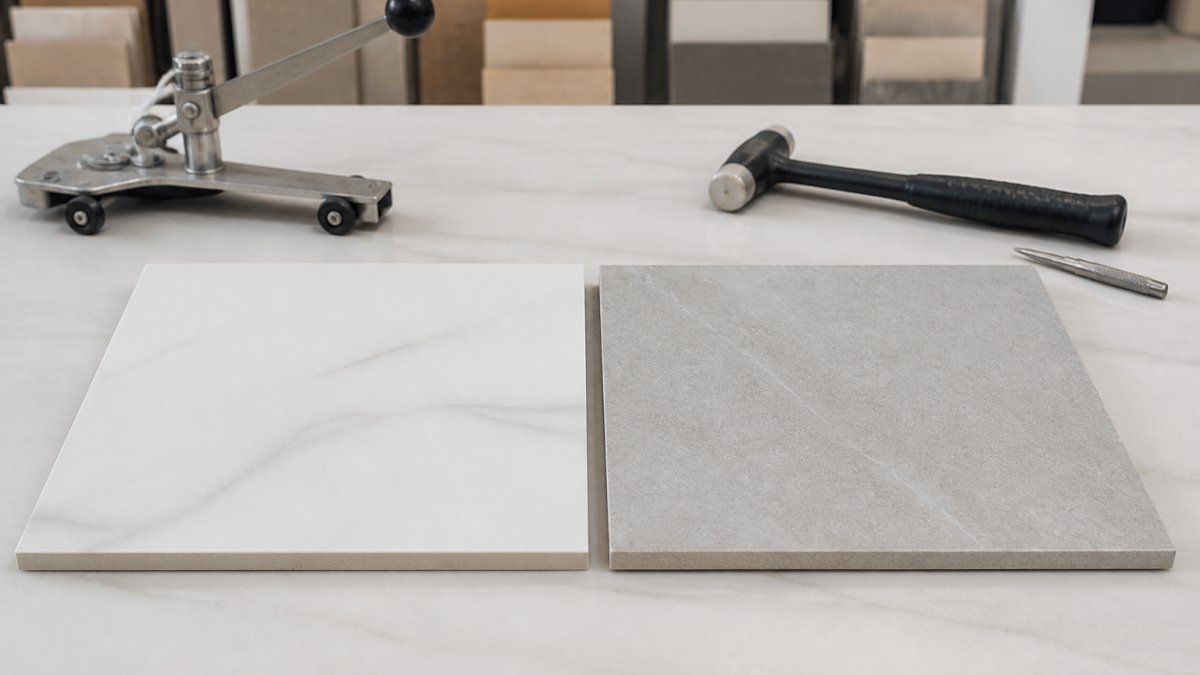
Italian porcelain wins on tile durability, usually by a wide margin. Porcelain is pressed from denser clay and fired at higher temperatures, making it less porous, harder, and more wear-resistant than ceramic, which costs less up front but holds up for fewer years under real traffic.
- Porcelain absorbs under 0.5% of its weight in water, while ceramic often absorbs 3-7%.
- The PEI scale runs 0 to 5, and Italian porcelain lines often carry PEI 4 or 5 as standard.
- For busy homes, choose PEI 4 through-body porcelain with a matte finish for kitchens, hallways, and pet zones.
- Buy 10-15% attic stock at installation, since discontinued tile lines cannot be matched later.
- Tile durability and installation durability are different: substrate, mortar, grout, and workmanship decide whether you reach the tile's ceiling.
Table of Contents
- Italian Porcelain vs Ceramic Tile Durability at a Glance
- Porcelain Tile Water Absorption and Why It Matters
- Porcelain Tile PEI Rating: Reading the Wear Scale
- The Best Tile for High-Traffic Areas in a Busy Home
- Porcelain vs Ceramic Tile Cost and Long-Term Value
- Glazed vs Through-Body Porcelain and Real Failure Modes
- Choosing Your Tile at the Showroom
- Frequently Asked Questions
Italian Porcelain vs Ceramic Tile Durability at a Glance
The short answer: Italian porcelain wins on tile durability, and it usually wins by a wide margin.
Italian porcelain adds another layer. Tile made in Italy follows tight manufacturing standards, and the best factories there produce through-body porcelain with consistent density from surface to core.
Below, we break down water absorption, the PEI wear scale, cost over time, and the failure modes nobody warns you about.
Quick Comparison Table
| Factor | Italian Porcelain | Ceramic Tile |
|---|---|---|
| Water absorption | Under 0.5% | Often 3-7% |
| Firing temperature | Higher, denser body | Lower, more porous |
| Wear resistance | Excellent, PEI 4-5 common | Good, PEI 2-3 common |
| Chip and crack resistance | High | Moderate |
| Best rooms | Kitchens, baths, high-traffic floors | Walls, light-traffic floors |
| Outdoor use | Suitable with proper rating | Rarely suitable |
| Upfront cost | Higher | Lower |
| Long-term value | Strong | Moderate |
Porcelain Tile Water Absorption and Why It Matters
Porcelain tile water absorption is the single best predictor of how a tile will age.
The Ceramic Tile Distributors Association classifies tile by absorption rate, and that classification drives where a tile can safely go. A ceramic tile in a bathroom floor is fine.
Density comes from the press and the kiln. Porcelain clay is pressed harder and fired hotter, which closes the pores in the tile body.
Porcelain Tile PEI Rating: Reading the Wear Scale
The porcelain tile PEI rating tells you how much foot traffic a glazed tile can handle before the surface shows wear. The scale runs from 0 to 5. PEI 0 is wall-only. PEI 3 suits residential floors.
Here is how to read it:
- PEI 0-1: Walls and backsplashes only
- PEI 2: Light residential floors, bedrooms and baths
- PEI 3: General residential floors
- PEI 4: Heavy residential and light commercial
A common mistake is buying a beautiful PEI 2 tile for a kitchen floor because the sample looked durable. The rating, not the look, decides where it belongs. Italian porcelain lines often carry PEI 4 or 5 as standard, which is why designers reach for them in entryways and mudrooms.
The Best Tile for High-Traffic Areas in a Busy Home
The best tile for high-traffic areas is unglazed or through-body porcelain rated PEI 4 or higher.
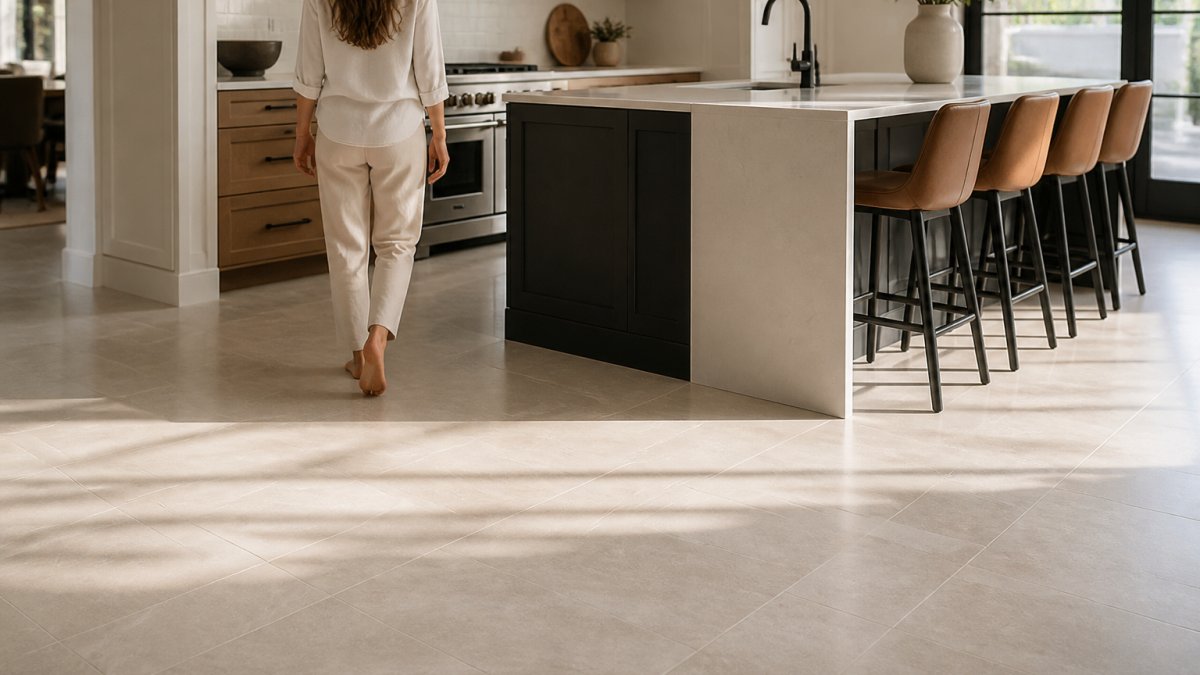
Where does traffic actually concentrate? Doorways, the run between the sink and the stove, and the path from the garage or back door. Those are the spots where glaze wears first on a lesser tile.
But "high traffic" is not one condition. The right porcelain changes with the use, and this is where most comparisons stop short. Here is how we think through the common scenarios:
- Pets (claws, water bowls, accidents): Claws do not usually scratch a PEI 4-5 porcelain, but grit tracked in from outside acts like sandpaper under paws. A matte or textured through-body porcelain hides micro-scratches better than a polished glazed surface, and its low absorption keeps accidents from soaking into the body. Avoid high-gloss polished porcelain on a pet floor; it shows every scuff.
- Heavy family foot traffic (kitchens, mudrooms, hallways): PEI 4 through-body porcelain is the workhorse. The failure point is rarely the tile face, it is the grout joint, which collects grit. Wider joints with sanded grout wear better than narrow unsanded joints in these zones.
- Kitchens: Dropped cast iron and shifting appliances cause edge chips more than surface wear. A slightly thicker tile (common in Italian porcelain lines) and a full mortar bed reduce chipping at edges. Through-body color means a chip is less visible than on a glazed tile with a contrasting core.
- Showers: Slip resistance matters as much as wear. A matte or textured porcelain with a wet coefficient of friction suitable for wet areas is the practical choice; polished porcelain in a shower is a slip risk regardless of its PEI rating. Low water absorption also means the tile body will not swell or harbor moisture behind the surface.
A common pattern in showrooms is that a beautiful PEI 2 tile gets chosen for a kitchen floor because the sample looked durable. The rating, not the look, decides where it belongs. Italian porcelain lines often carry PEI 4 or 5 as standard, which is why designers reach for them in entryways and mudrooms, but the rating still has to match the room, not the brand.
Porcelain vs Ceramic Tile Cost and Long-Term Value
Porcelain vs ceramic tile cost looks lopsided at the register. The BuildDirect learning center notes that ceramic tiles generally cost well below porcelain, driven largely by material and firing costs.
But the register is not the whole story. Consider what you are actually buying:
- Replacement cost: A worn ceramic floor gets torn out. A porcelain floor often just gets cleaned.
- Installation labor: Both cost similar to install, so paying twice for the same labor is the real penalty of a short-lived tile.
- Repairability: Matching a discontinued ceramic years later is often impossible. Porcelain lines stay in production longer.
For a kitchen or bath you plan to keep for twenty years, the cheaper tile is rarely the cheaper choice. For a powder room or a wall application, ceramic makes complete sense and saves real money.
Glazed vs Through-Body Porcelain and Real Failure Modes
Glazed porcelain carries a decorative layer over a porcelain body. Through-body porcelain, sometimes called full-body, runs the color and pattern through the entire tile. The difference shows up years later, when a glazed tile chips at an edge and reveals a pale core underneath.
That distinction drives how each tile fails and how repairable the failure is:
- Edge chipping happens when a dropped tool or heavy furniture strikes the tile edge. On a glazed tile, the chip exposes the body color, often stark white or tan against a dark glaze, and the defect is visible from across the room. On through-body porcelain, the chip exposes the same color as the surface, so it reads as a shadow rather than a scar. Thin tiles chip more easily than thick ones; a thicker body and a full mortar bed spread the impact.
- Glaze wear occurs where grit gets ground into the surface, typically in doorways and at the edge of a counter. Once the glaze wears through, a glazed tile has no protective layer left, and the porous body underneath stains and absorbs. Through-body porcelain has no glaze to lose, so wear shows as a slow polish rather than a breach.
- Cracking usually comes from an uneven subfloor, a missing movement joint, or insufficient mortar coverage, an installation problem, not a tile problem. A premium Italian porcelain set over a poorly prepped subfloor will fail faster than a modest ceramic set correctly. The Tile Council of North America publishes installation standards that address substrate prep, mortar selection, and movement joints, and those standards do as much for longevity as the tile itself.
- Lippage, tiles sitting at different heights, is a setting error that reads as a defect. It is more visible on large-format tiles and on polished surfaces that reflect light. A leveling system and a skilled setter prevent it; no tile rating fixes it after the fact.
- Staining is a function of absorption and surface texture. A matte through-body porcelain can hold dirt in its texture even though it will not absorb it, while a polished glazed tile resists staining until the glaze is compromised. Sealing grout, not the tile, is the routine maintenance most floors actually need.
Repairability is where the glazed-versus-through-body choice pays off or punishes you. A chipped glazed tile usually needs replacement, and matching a discontinued glaze years later is often impossible.
That last point matters. Tile durability and installation durability are two different things. The tile you choose sets the ceiling on performance; the substrate, mortar, grout, and workmanship decide whether you ever reach it.
Choosing Your Tile at the Showroom
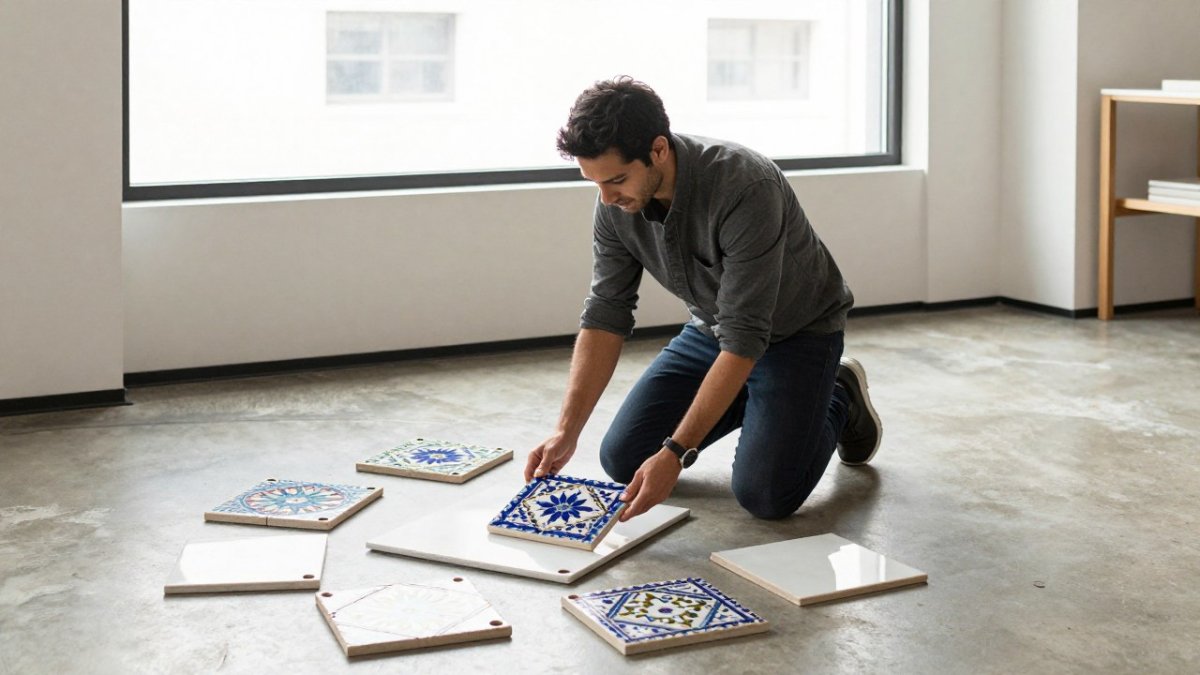
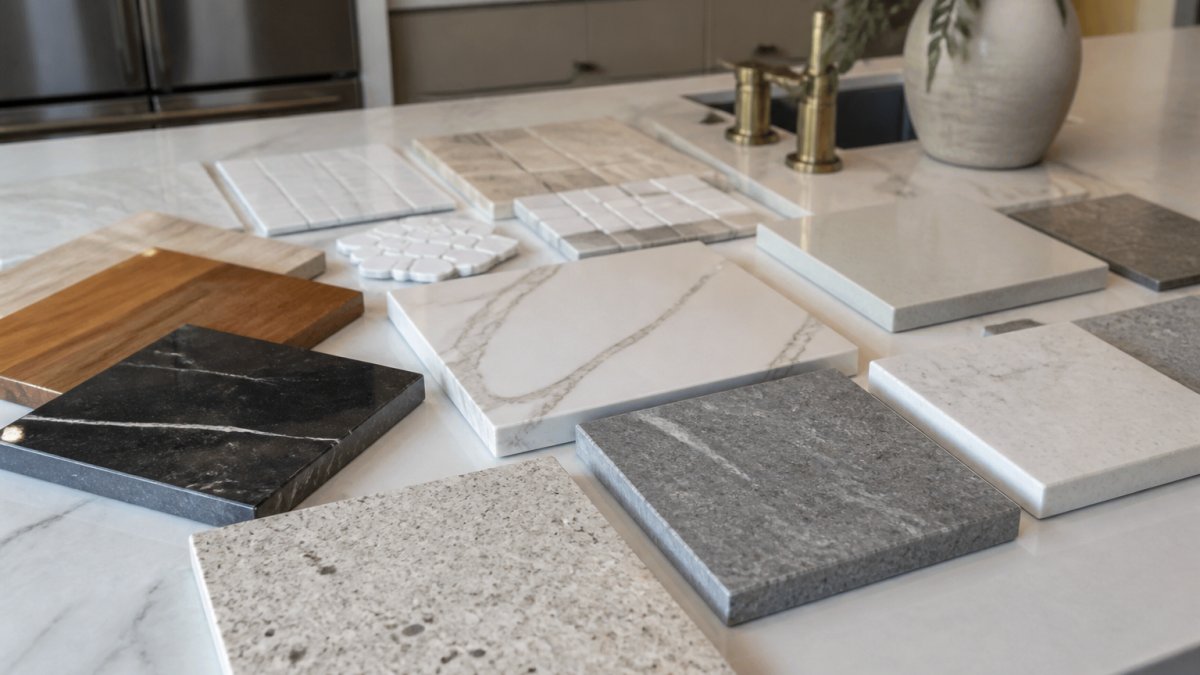
Samples under fluorescent light lie. A tile that reads warm in the store can turn cold in a north-facing kitchen, and a grout color that looked neutral can pull yellow against real cabinetry.
Bring these questions to any showroom visit:
- What is the water absorption rate and PEI rating of this tile?
- Is it glazed or through-body?
- What substrate prep does my floor need?
- How does this tile handle the specific room I am tiling?
Our team pairs Italian porcelain selections with a guided design process and expert installation through our sister studio, Artisan Studio CT, so the tile you fall for is the tile that performs.
Frequently Asked Questions
Which lasts longer, porcelain or ceramic tile?
Porcelain generally lasts longer in demanding settings. It is made from denser clay and fired at higher temperatures, which leaves it less porous and more resistant to moisture and wear. Ceramic performs well on walls and in low-traffic rooms, but its higher absorption makes it more vulnerable in wet or busy areas. With correct installation, both can serve for decades, yet porcelain holds its surface and structure better under repeated foot traffic, moisture, and temperature swings.
Are Italian porcelain tiles worth the higher cost?
Italian porcelain often justifies the price when you plan to stay in the home or want a specific look. Manufacturers there fire tiles at high temperatures and control density closely, which supports the water absorption and PEI performance that drive tile durability. The premium also buys design range: realistic stone and marble visuals, consistent sizing, and through-body options. If the tile is going into a kitchen floor or a bathroom that sees daily use, the longer service life can offset the upfront difference.
Does porcelain tile chip or crack easily?
Porcelain resists scratching and abrasion well, but it is not indestructible. Chips usually come from impact, such as a dropped pan or a heavy object hitting an edge, and cracks often trace back to an uneven substrate or a missing expansion joint rather than the tile itself. Glazed porcelain can also show a visible chip where the body color differs from the surface. Proper installation and a spare box of tile kept on hand make repairs manageable.
Can ceramic tile be used in high-traffic areas?
Yes, with the right specification. A ceramic tile rated PEI 3 or higher can handle residential floors, including hallways and family rooms, as long as it is installed over a stable substrate. The limits appear in wet rooms, outdoor spaces, and commercial settings, where porcelain's lower water absorption and greater density give it an edge. For a low-traffic guest bath or a wall application, ceramic remains a cost-effective and durable choice.
The gap between a floor that looks tired in five years and one that still looks new in fifteen usually comes down to two decisions: the tile you choose and the team that installs it. We would rather help you get both right the first time. Book an appointment with Artisan Tile Kitchen & Bath to compare Italian porcelain samples under natural light, review durability ratings side by side, and build a plan that carries from selection through installation.