 blog
Best Countertop Materials for Kitchens: 2026 Guide
Table of Contents
- Quartz vs Granite Countertops: Which Engineered or Natural Stone Wins?
- Most Durable Kitchen Countertops: Heat, Scratch, and Stain Resistance Ranked
- Kitchen Countertop Cost Comparison: What You Pay Upfront and Over Time
- Best Countertop Material for the Money: Value Picks for Every Budget
- Material-Specific Care: Cleaning, Sealing, and Repair for Each Surface
- Performance by Real Kitchen Use Case: Busy Families, Bakers, and Entertainers
- Conclusion: Choosing the Right Countertop Material for Your Kitchen
- Frequently Asked Questions
Last Updated: October 7, 2026
Quartz vs Granite Countertops: Which Engineered or Natural Stone Wins?
Choosing among the best countertop materials for kitchens comes down to one trade-off between countertop materials: engineered consistency versus natural character. Quartz wins on low maintenance and stain resistance. Granite wins on heat tolerance and one-of-a-kind slabs. At Artisan Tile Kitchen & Bath, we help homeowners compare both under natural light before they commit.
Quartz is engineered stone: ground quartz mixed with resin and pigment, pressed into slabs with consistent color and pattern. It never needs sealing, resists stains well, and handles daily wiping without fuss. The trade-off is heat. A hot pan set directly on quartz can scorch the resin, so trivets are not optional.
Granite is natural stone cut from the earth, so no two slabs match. It shrugs off heat and takes decades of use, but it is porous. Without periodic sealing, oils and wine can leave marks. For a full breakdown of how natural stone is classified, the Natural Stone Institute's material guides are worth reading before you shop.
Most Durable Kitchen Countertops: Heat, Scratch, and Stain Resistance Ranked
The most durable kitchen countertops are not one material but a short list, ranked differently depending on which abuse matters most in your home. Heat, scratches, and stains rarely favor the same surface, and the reason comes down to what each material is made of.
| Material | Heat | Scratch | Stain | Sealing | Repairable? |
|---|---|---|---|---|---|
| Quartzite | Excellent | Very good | Very good | Occasional | Yes, professional honing |
| Granite | Excellent | Very good | Good | Periodic | Yes, professional honing |
| Quartz | Fair | Excellent | Excellent | None | No, resin scorch is permanent |
| Soapstone | Excellent | Fair | Good | Mineral oil | Yes, sands out easily |
| Butcher block | Poor | Poor | Fair | Oil regularly | Yes, sand and re-oil |
| Marble | Excellent | Fair | Poor | Periodic | Partly, etching needs honing |
| Laminate | Poor | Poor | Fair | None | No, replace the section |
| Stainless steel | Excellent | Fair | Excellent | None | Partly, scratches blend, dents do not |
| Solid surface | Poor | Fair | Good | None | Yes, sanded and buffed |
| Porcelain | Excellent | Excellent | Excellent | None | No, chips are permanent |
Why heat behaves the way it does. Natural stone and porcelain are fired or formed under extreme heat, so a hot pan is not a threat. Quartz is roughly 90 percent ground quartz bound with resin, and that resin is the weak link: a pan straight off the stove can leave a scorch mark that no cleaner will lift.
Why scratch resistance splits the field. Quartz, porcelain, and quartzite are hard enough that a knife dragged across the surface usually leaves metal transfer rather than a true scratch, and that mark wipes off. Granite sits just below.
Why stains are a porosity story. Non-porous surfaces, quartz, porcelain, stainless steel, solid surface, have nowhere for liquid to go, so wine, oil, and turmeric sit on top until you wipe them. Natural stone is porous to varying degrees.
Repairability is the durability question nobody asks. A surface that scratches but can be refinished may outlast one that resists scratches but cannot be fixed. Solid stone and wood can be honed, sanded, or re-oiled by a professional, and the repair is usually invisible. Engineered surfaces, quartz, laminate, and porcelain, generally cannot be spot-repaired; a chip or scorch means living with it or replacing the slab. Stainless steel is the middle case: fine scratches blend into the grain over time, but a deep dent stays.
If you cook hard and want a surface you can restore rather than replace, quartzite, granite, or soapstone are the honest picks. If you want the lowest-maintenance surface and can live with the heat caveat, quartz is the practical answer.
Kitchen Countertop Cost Comparison: What You Pay Upfront and Over Time
A kitchen countertop cost comparison should track two numbers, not one: the upfront price and the cost of keeping the surface alive over ten years. The second number is where cheap materials stop being cheap.
Upfront cost, in rough tiers. Pricing varies by region, slab availability, edge profile, and cutout count, but the general bands most fabricators work within look like this:
- Laminate: the lowest upfront cost, typically a fraction of stone, but with a shorter service life.
- Butcher block: modest material cost, but you pay in labor and ongoing oiling.
- Solid surface and quartz: mid-range, with quartz at the higher end of that band.
- Granite: mid to upper range, driven mostly by slab selection and edge detail.
- Quartzite, marble, and soapstone: the premium tier, where a single dramatic slab can double the material line item.
- Porcelain and stainless steel: premium, largely because fabrication and installation are more demanding.
Installation is not a footnote. Every material carries a fabrication and install charge on top of the slab price, and the following push it higher: complex edge profiles (a mitered or ogee edge costs more than an eased edge), undermount sink cutouts, cooktop cutouts, and any seam placement that requires extra templating. Because pricing shifts with slab availability and project scope, we quote each kitchen individually rather than publish numbers that go stale. Consumer guidance on renovation budgeting is a useful starting point for planning.
The ten-year view. Over time, the math flips. Laminate may need replacing within a decade, and a full tear-out and reinstall resets your cost to zero. Wood needs re-oiling every few months and occasional sanding. Natural stone needs sealing once or twice a year, plus the occasional professional honing if you want to erase etching or scratches. Quartz needs almost nothing beyond a damp cloth, but if it scorches or chips, the repair is replacement. That is the lifecycle argument for spending more once, but only if the material you pick is one you can actually maintain.
| Material | Upfront tier | Ongoing cost | Typical replacement horizon |
|---|---|---|---|
| Laminate | Low | None | Shorter, often under a decade |
| Butcher block | Low-mid | Oil, occasional sanding | Long with upkeep |
| Quartz | Mid-high | None | Long, but damage = replacement |
| Granite | Mid-high | Sealer, occasional honing | Very long |
| Quartzite | High | Sealer, occasional honing | Very long |
| Marble | High | Sealer, honing for etching | Long with care |
| Soapstone | High | Mineral oil | Very long |
| Porcelain | High | None | Very long |
| Stainless steel | High | None | Long |
| Solid surface | Mid | Occasional refinishing | Long, repairable |
Where the money actually goes. For most projects, the slab is the smaller half of the invoice. Fabrication, templating, edge work, cutouts, and installation typically make up a large share of the total, which is why two kitchens with the same material can land thousands apart. If you are comparing quotes, compare the full scope, not just the per-square-foot slab price.
Best Countertop Material for the Money: Value Picks for Every Budget
The best countertop material for the money depends on how long you plan to stay. If you are renovating to sell soon, a mid-range quartz delivers the look buyers expect without overspending. If this is your forever kitchen, quartzite or granite earns its price through decades of service.
Three value tiers hold up in practice:
- Budget: Laminate for rental units and quick flips; butcher block for bakers who accept the upkeep.
- Mid-range: Quartz, the workhorse pick for busy families who want zero maintenance.
- Premium: Quartzite, marble, and soapstone for kitchens where the surface is the centerpiece.
Resale value matters here. Buyers notice countertops immediately, and a worn laminate can undercut an otherwise strong kitchen. For sourcing context, the U.S. Environmental Protection Agency's indoor air quality resources explain why low-emission binders and finishes are worth asking about.
Material-Specific Care: Cleaning, Sealing, and Repair for Each Surface
Every countertop material has its own care rules, and using the wrong cleaner is how beautiful surfaces get ruined. Match the routine to the stone.
- Quartz: Warm water, mild soap, soft cloth. Avoid abrasive pads and harsh chemicals.
- Granite and quartzite: Seal periodically, wipe spills promptly, use a pH-neutral cleaner.
- Marble: Blot acidic spills immediately; etching is permanent without professional honing.
- Soapstone: Reapply mineral oil to even out the patina; small scratches sand out easily.
- Butcher block: Oil regularly, never let water pool, sand and re-oil deep cuts.
- Laminate: Avoid knives and hot pans; scratches cannot be repaired, only replaced.
Repairability separates these materials more than most buyers expect. Solid stone and wood can be refinished. Engineered and laminate surfaces generally cannot.
Performance by Real Kitchen Use Case: Busy Families, Bakers, and Entertainers
The right surface changes with how you actually cook. A household of five with toddlers has different needs than a weekend baker or a couple who hosts every holiday.
For busy families, quartz is the practical answer: stain-resistant, no sealing, forgiving of juice spills and homework sessions. For bakers, butcher block is unbeatable for dough work, though it needs oiling and a separate zone for hot pans. Entertainers tend to favor quartzite or marble for the visual drama, accepting more careful maintenance in exchange. If you are planning an aging-in-place renovation, talk to us about surfaces and layouts that stay functional over time.
Conclusion: Choosing the Right Countertop Material for Your Kitchen
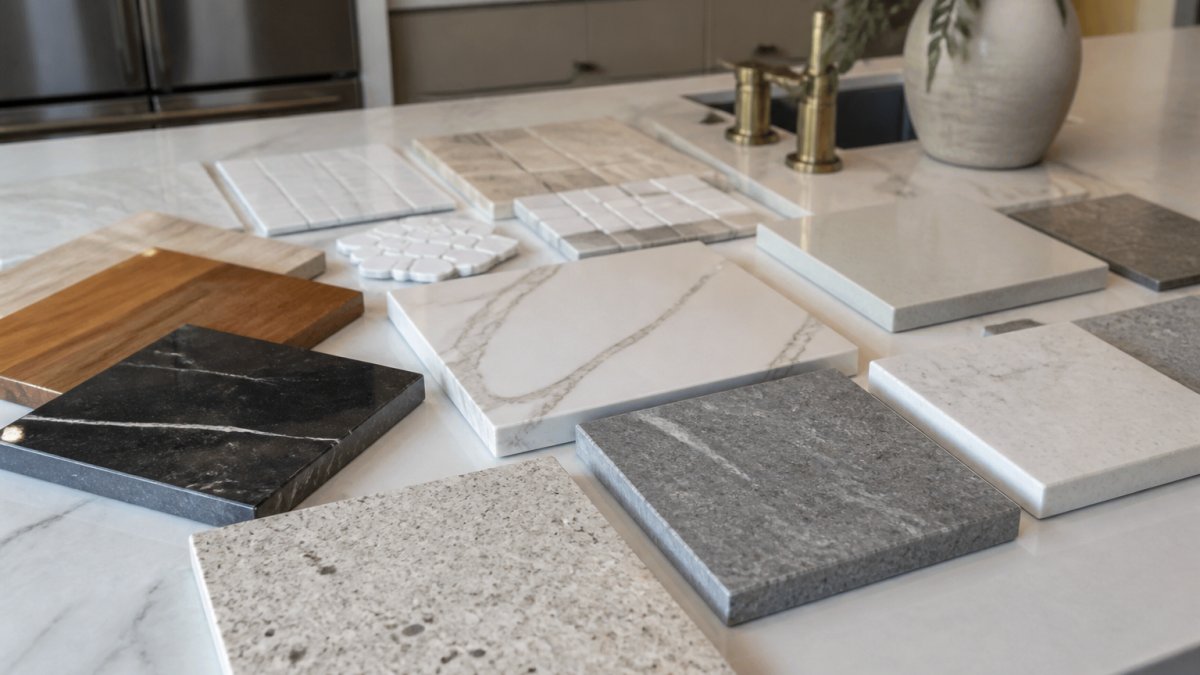
The honest answer is that no single material wins every category, which is exactly why we keep samples of each on the floor. Quartz, granite, quartzite, soapstone, marble, butcher block, and laminate each solve a different problem, and the right pick depends on your cooking, your budget, and how long you plan to stay.
That is where Artisan Tile Kitchen & Bath comes in. Our curated showroom lets you compare materials under natural light and against real finishes, our team works with Artisan Studio CT on full-service design, and we handle expert installation from concept to completion. Book an appointment and choose a surface you will still love in ten years.
Frequently Asked Questions
What is the most durable countertop material for a kitchen?
Quartz and quartzite rank highest for durability. Quartz, an engineered stone, resists scratches, stains, and heat better than most natural stones because it is non-porous. Quartzite, a natural stone, is harder than granite and handles heat well, though it requires sealing. Granite is also very durable but can chip at edges. For a busy kitchen, quartz offers the best balance of toughness and low maintenance.
What is the best countertop material for the money?
Laminate and butcher block are the most affordable options, typically costing a fraction of natural stone. For a step up in durability and appearance, quartz offers strong value because it never needs sealing and resists stains. If you want natural stone on a budget, granite remains a cost-effective choice. The best material for the money depends on how long you plan to stay and how much upkeep you want.
Is quartz or granite better for a kitchen?
Quartz is better for low-maintenance kitchens because it is non-porous, never needs sealing, and resists stains and scratches. Granite is better if you want a unique natural stone look and don't mind annual sealing. Quartz handles heat less well than granite, so always use trivets. For busy households, quartz usually wins on ease of care; for a one-of-a-kind slab, granite is the choice.
Which countertop materials resist heat and stains?
Soapstone, quartzite, and granite resist heat best, so you can set down hot pans without damage (though trivets are still wise). For stain resistance, quartz and solid surface lead because they are non-porous. Marble and limestone stain easily and etch from acids. If you do a lot of cooking with hot pots, choose quartzite or soapstone; if you worry about spills, choose quartz.
Most homeowners underestimate how much a countertop decision shapes daily life, from where you chop to how you clean. Artisan Tile Kitchen & Bath pairs a curated showroom, guidance from our sister studio Artisan Studio CT, and expert installation so the material you choose actually fits how you live. Get started with Artisan Tile Kitchen & Bath and build a kitchen surface that lasts.