 Listicle
Which Tile Is Best for a Bathroom Floor?
Last Updated: November 19, 2026
Quick Summary
Porcelain is the best bathroom floor tile for most homes, because its dense body absorbs very little water and resists wear. Ceramic suits tighter budgets and lighter traffic, while natural stone suits style-focused bathrooms that accept regular sealing and care.
- Porcelain is generally the strong choice for most homeowners because it resists moisture and wears well.
- Ask for the wet COF or DCOF rating, since a tile can grip dry but slip wet.
- Matte or textured finishes give better grip on wet bathroom floors than polished ones.
- Medium-format porcelain, around 12-by-24 or 12-by-12 inches, balances grip with easier cleaning.
- Confirm the grout type and subfloor prep with your installer before ordering the tile.
Table of Contents
- How We Compared Bathroom Floor Tiles
- Quick Comparison: Porcelain, Ceramic, and Natural Stone at a Glance
- Best Porcelain Tiles for Bathroom Floors
- Best Tiles for Bathroom Floor Non-Slip Performance
- Small Bathroom Floor Tile Ideas and Bathroom Floor Tile Sizes
- Bathroom Floor Tile Sizes and Grout Trade-Offs
- Choosing the Right Bathroom Floor Tile for Your Home
- Frequently Asked Questions
How We Compared Bathroom Floor Tiles
Choosing the best tile for bathroom floors comes down to three things: how well the surface resists water, how much grip it gives when wet, and how it holds up to daily use. At Artisan Tile Kitchen & Bath, we start every comparison with those three tests, because a tile that looks perfect on a showroom wall can be a poor choice underfoot.
Our approach was practical. We reviewed the bathroom floor tile options offered across major retail and tile resources, including Lowe's bathroom floor tile buying guide, which compares ceramic against porcelain and natural stone. We also looked at The Tile Shop's bathroom flooring guide, which covers material pros and cons alongside installation considerations.
We weighed each material against the same criteria:
- Water absorption: how readily the body of the tile takes in moisture
- Slip resistance: how the surface performs when wet
- Durability: how it handles foot traffic and daily cleaning
- Maintenance: how much grout and sealing upkeep it demands
- Cost: the material cost, with installation priced separately
Pricing varies widely by product, quantity, and delivery, so we treat cost as a range to confirm rather than a fixed figure. For current prices and a quote on any tile in this guide, contact Artisan Tile Kitchen & Bath directly.
Quick Comparison: Porcelain, Ceramic, and Natural Stone at a Glance
Most bathroom floor shoppers narrow their search to three materials. Porcelain is the usual first recommendation. TileMart's bathroom floor guide identifies porcelain as its best overall choice for bathroom floors, citing its density and water resistance.
Ceramic is the budget-friendly alternative. Natural stone brings a unique look but asks for more care. Here is how the three compare.
| Material | Water Resistance | Typical Use | Maintenance | Best For |
|---|---|---|---|---|
| Porcelain | High, dense body | Main bathroom floors | Low | Most bathrooms |
| Ceramic | Good, glazed surface | Powder rooms, lighter traffic | Low | Budget-conscious projects |
| Natural stone | Varies, usually needs sealing | Design-led bathrooms | Higher | Style-focused spaces |
Porcelain is generally a strong choice for most homeowners because it resists moisture and wears well. Ceramic can suit tighter budgets, and natural stone suits buyers who accept sealing and periodic care.
Best Porcelain Tiles for Bathroom Floors
Porcelain is our first pick for most bathrooms. Its dense body absorbs very little water, which keeps it stable in wet, humid rooms.
Several retailers carry porcelain options worth a look. Merola Tile's bathroom tile collection offers porcelain suited to moisture-prone spaces such as bathroom floors. For a hexagonal look, the Daltile Modern Hex porcelain floor tile is a bathroom floor option. Pricing depends on quantity, dates, and delivery, so contact Artisan Tile Kitchen & Bath for current prices.
Pros:
- Very low water absorption
- Strong resistance to wear
- Wide range of finishes and sizes
Cons:
- Harder to cut than ceramic
- Premium options cost more per square foot
Best Tiles for Bathroom Floor Non-Slip Performance
Slip resistance matters as much as looks, especially where floors get wet. The number that predicts grip is a measured rating, not a finish label.
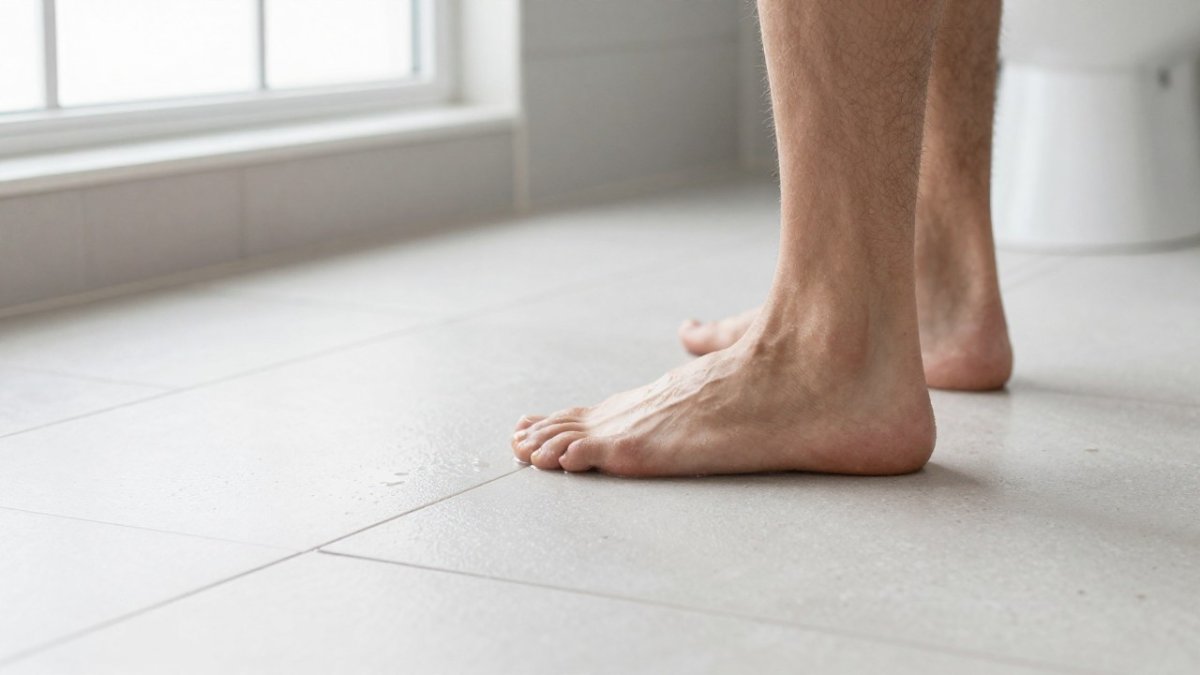
The rating you will see most often is the coefficient of friction, or COF. It is a numeric score produced by a standardized test, most commonly the ASTM C1028 method, which drags a weighted slider across a dry or wet tile surface and reports the ratio of horizontal force to vertical load. A higher number means more resistance to slipping. The commonly cited threshold for level interior floors is 0.60, and many specifiers treat 0.50 as a minimum for wet areas. The critical detail most guides omit: a tile can score well dry and poorly wet, so always ask for the wet COF, not the dry one.
A second rating appears on commercial-leaning products: the DCOF AcuTest value. This is measured under the ANSI A326.3 standard using a different instrument and is reported to two decimals. The generally referenced benchmark for level interior wet areas is 0.42 or higher. DCOF and COF are not interchangeable, a product may carry one, the other, or both, so compare like with like and do not assume a 0.60 COF equals a 0.60 DCOF.
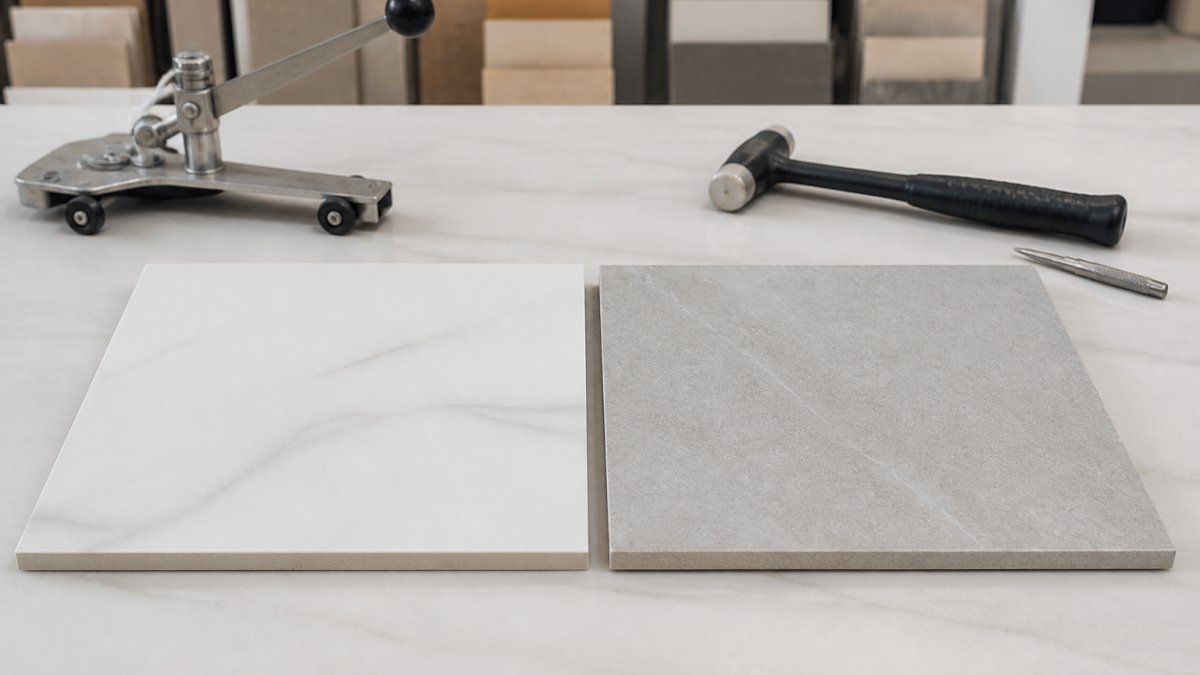
Finish is the first lever. Polished and high-gloss surfaces become slick quickly when damp because water sits on a smooth plane with no texture to displace it. Honed, matte, and lightly textured finishes break the water film and give the foot something to bite. For a main bathroom floor, choose matte or textured and reserve polish for walls or a dry vanity zone.
Tile size and grout joints are the second lever. Grout lines act as traction channels, they interrupt a continuous wet plane and give the foot an edge to catch. A 12-by-24-inch tile with 1/8-inch joints offers far fewer of those channels than a 2-by-2-inch mosaic with 1/8-inch joints. This is why small-format mosaic is common on shower floors even when the main floor uses large tile. If you want large-format tile on a wet floor, pair it with a textured finish and consider a slightly wider joint to restore some grip.
Texture has a maintenance cost. Heavily textured or cleft surfaces grip well but trap soap scum and require more scrubbing. A lightly textured matte porcelain is the usual compromise: enough tooth for wet feet, not so much relief that cleaning becomes a chore.
Watch out: A product labeled "non-slip" is a marketing term, not a rating. Ask for the wet COF or DCOF value and the test method behind it.
Small Bathroom Floor Tile Ideas and Bathroom Floor Tile Sizes
Small bathrooms benefit from light, neutral tones and fewer grout lines. Large-format tiles reduce grout and can make a tight room feel more open. Smaller mosaic tiles add pattern but create more joints to clean.
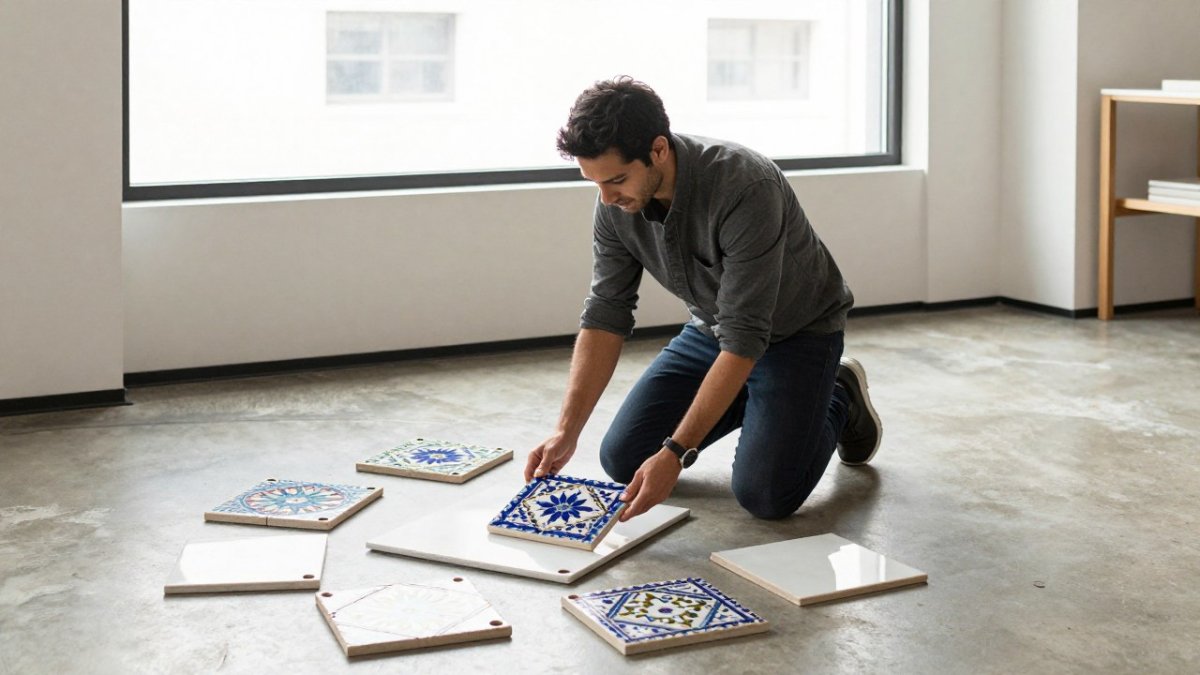
For design ideas, The Tile Shop's bathroom floor inspiration shows handmade tile, blue hues, and Moroccan patterns. Use these as starting points rather than rules.
Match the tile size to the room. Oversized tiles in a narrow powder room can look out of scale, while very small tiles suit corners and shower floors well.
Bathroom Floor Tile Sizes and Grout Trade-Offs
Tile size changes the amount of grout in the floor, and grout is where bathroom floors often fail. Joints need sealing and regular cleaning, and they can stain. But the trade-off is more specific than "big tiles equal less grout," and the numbers matter when you are planning a project.
Grout quantity scales with joint length, not tile area. A 12-by-12-inch tile has about 4 linear feet of joint per square foot of floor. A 24-by-24-inch tile cuts that to roughly 2 linear feet per square foot. A 2-by-2-inch mosaic jumps to about 12 linear feet per square foot, six times the joint length of the 12-inch tile. More joint length means more grout to mix, more surface to seal, and more lines to scrub. It also means more places for water and soap to collect.
Joint width is a separate decision. Common bathroom floor joints run 1/8 inch to 3/16 inch for rectified porcelain, and 3/16 inch to 1/4 inch for pressed-edge ceramic or natural stone where slight size variation needs hiding. Wider joints hold more grout and are more forgiving of subfloor imperfections; narrower joints look cleaner but demand a flatter substrate and more precise tile.
Grout type matters more than grout color. Cementitious grout is the traditional choice and needs sealing every one to two years in a wet room. Epoxy grout resists staining and moisture far better and does not require sealing, but it costs more and is less forgiving to install. For a bathroom floor that sees daily wet traffic, epoxy or a high-performance cementitious grout with a sealer is the usual recommendation. Confirm the grout type with your installer before the tile is ordered, because the choice affects both cost and long-term maintenance.
Subfloor flatness is the hidden cost of large tile. Most tile manufacturers specify a substrate flatness tolerance of 1/8 inch in 10 feet for large-format tile, and some call for 1/16 inch in 10 feet. Meeting that tolerance often means self-leveling compound or additional prep labor. Small mosaic tolerates more variation and can follow gentle slopes, which is why it is common on shower floors where a slope to the drain is required.
Traction and cleaning pull in opposite directions. More joints mean more grip channels but more scrubbing. Fewer joints mean easier cleaning but a slicker, more continuous wet plane. The practical middle ground for most bathrooms is medium-format porcelain, roughly 12-by-24-inch or 12-by-12-inch, with a narrow, stain-resistant grout and a matte finish. That combination keeps joint length manageable, cleans easily, and still offers enough texture for wet feet.
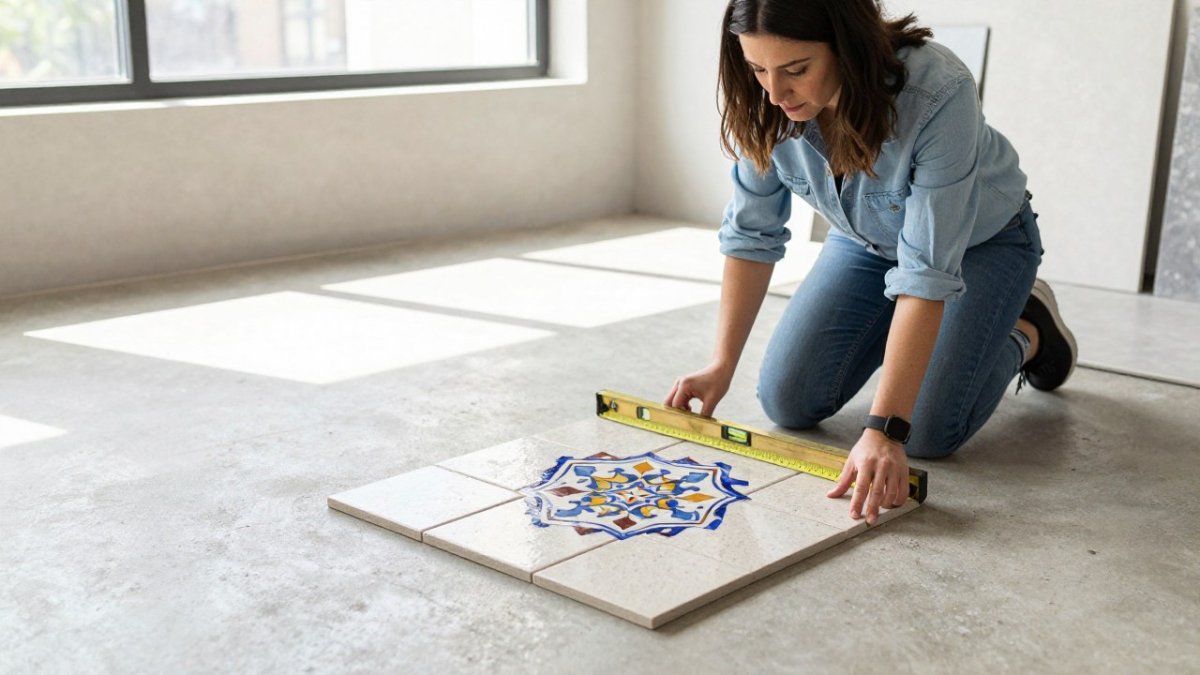
Watch out: Very large tile in a small powder room can look out of scale and can also amplify subfloor lippage, the height difference between adjacent tiles, which becomes a trip edge and a cleaning trap. Dry-fit a sample in the room before committing to an oversized format.
We recommend a middle ground for most bathrooms: medium-format porcelain with a narrow, stain-resistant grout. Ask your installer about grout type and subfloor prep before you commit, since both change the installed cost far more than the tile price per square foot suggests.
Choosing the Right Bathroom Floor Tile for Your Home
Start with how the room gets used. A busy family bathroom needs a durable, low-maintenance porcelain. A guest powder room can handle a decorative ceramic. A primary bath where you want a spa feel may justify natural stone and the sealing it requires.
Then check the practical details: the slip rating, the finish, the tile size, and the grout. Confirm pricing and availability before you order, since pricing depends on quantity, dates, and delivery.
If you want help narrowing the options, you can book an appointment with Artisan Tile Kitchen & Bath to see samples under natural light and request a quote.
Best for: homeowners who want one reliable floor that handles moisture and daily wear. Skip if: you need a fixed price today, since costs vary by product, quantity, and delivery.
Frequently Asked Questions
What is the best tile for a bathroom floor?
Porcelain is the most common recommendation for bathroom floors because it is dense and has low water absorption, which makes it resistant to moisture and staining. Ceramic is a reasonable, lower-cost alternative for dry-to-damp bathrooms. Natural stone can look striking but usually needs sealing and more upkeep. The right choice depends on your moisture exposure, how much you want to spend, and the slip resistance you need.
Is porcelain or ceramic tile better for bathroom floors?
Porcelain is generally the better choice for bathroom floors because it absorbs less water, is harder, and holds up better to wear. Ceramic costs less and works well in lighter-traffic bathrooms, but its higher absorption rate makes it more vulnerable in wet areas. When comparing products, look at the water absorption rating on the spec sheet, with porcelain typically rated below 0.5 percent.
What bathroom floor tile is least slippery?
Tiles with a matte or textured surface generally offer better traction than polished tiles, especially when wet. Look for a published slip resistance rating, such as a coefficient of friction (COF) value or a rating under the ANSI A326.3 test method, rather than relying on appearance. Keep in mind that slip resistance can change as a floor is cleaned, so ask your supplier for the wet rating specifically.
What tile size is best for a small bathroom floor?
Smaller tiles, such as 2-by-2-inch mosaics or 12-by-12-inch squares, are often used in small bathrooms because they create more grout lines and can help with traction. Large-format tiles can make a small room feel more open, but they require careful installation and fewer grout lines. Choose a size that suits the room's proportions and the amount of slip resistance you need.